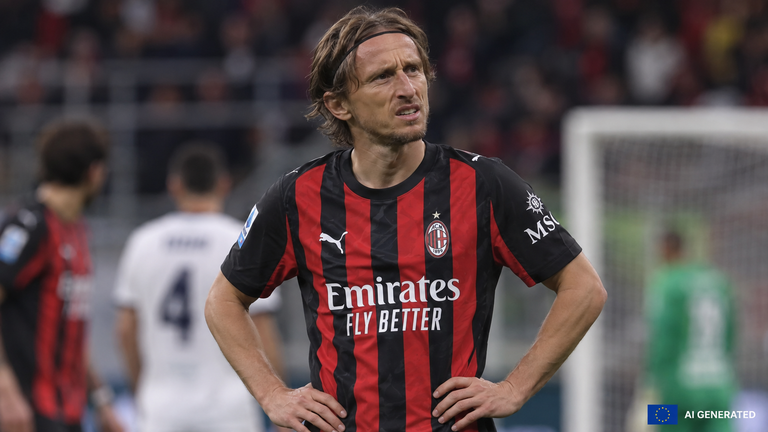
Saturday's draw at Lazio laid bare the tension between Luka Modrić's qualities and Ruben Amorim's demands, and according to Tuttosport, the coach now faces a genuine tactical puzzle over how to deploy his most decorated midfielder.
Modrić was perhaps Milan's most reliable performer last season, but the shift to Amorim's 3-4-2-1, with its emphasis on dominant pressing and high-intensity midfield play, has altered the equation. Last term, two central midfielders could compensate for the Croatian's lighter physical output. In the current system, that safety net no longer exists.
Against Lazio, the problem was visible from the start. Modrić struggled to cope with the match's high tempo and made too many errors, prompting Amorim to substitute him at half-time. Yunus Musah came on, and the improvement was immediate, his intensity injecting exactly the energy the midfield had lacked. It was a telling contrast.
The difficulty, as Tuttosport notes, is that benching Modrić altogether is not straightforward. He remains one of Milan's undisputed leaders, and his ability to dictate tempo is something no other player in the squad can replicate. But the football Amorim envisions asks for something different from its midfielders: relentless pressing, fast transitions, and sustained physical output across 90 minutes.
That mismatch has prompted discussion over whether Modrić could be moved into one of the attacking midfield slots behind the striker. Even there, though, Amorim wants players who press high and hound defenders, which plays to the same physical demands the Croatian finds harder to meet at 41.
The likelier solution, according to the paper, may be using Modrić as a second-half weapon. As opponents tire, space opens up, and that is precisely the environment where his passing range and game management become most effective. A 45-minute Modrić against weary legs could offer more than a 90-minute Modrić trying to match the intensity around him.
The three-week international break might have offered time to work on the problem at Milanello, but Modrić will not be there. He has committed to continuing with Croatia, leaving Amorim to wait before trialling any new role in a competitive setting.
How Amorim squares the circle, getting the best from a Ballon d'Or winner whose strengths sit outside the system's core demands, will shape Milan's midfield plans for the rest of the season. The next move belongs to the coach.