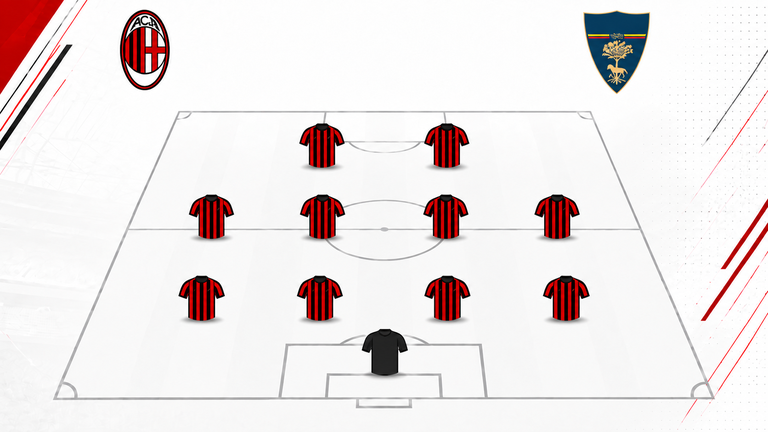
Ruben Amorim ditched his usual 3-4-2-1 for a back four against Lecce on Sunday night, and the 3-0 win suggested the tactical shift was more than a one-off experiment.
Milan lined up in what shifted between a 4-4-2, a 4-4-1-1, and a 4-2-3-1 depending on the phase of play, a change Koni De Winter confirmed in his post-match comments. For a coach who had appeared firmly attached to his three-at-the-back system, the switch caught many off guard, but the reasoning behind it was straightforward.
The primary motivation was fluidity in the final third. In the 3-4-2-1, Milan's build-up had become concentrated through central areas, with Luka Modric or Ardon Jashari dropping deep and Mario Gila stepping out from centre-right. Opponents had learned to read it. Moving Gila wide and switching to four at the back stretched the pitch and removed those easy reference points, while the overlapping runs of Pervis Estupinan and Gila gave the wings a different dimension entirely.
Gonçalo Ramos operating as a playmaker added another layer. Rather than simply leading the line, the Portuguese dropped into the attacking midfield zone to link play, and the three goals showed how varied Milan's attacking patterns became as a result. On the opener, Ramos drew attention by coming short, which left Christian Pulisic unmarked to receive Strahinja Pavlović's pass. For Adrien Rabiot's goal, the Frenchman spotted the space opening after Gila found Pulisic and sprinted forward to fill it. Diego Moreira's strike came from yet another route: Ramos won the ball high, then Moreira took over with a driving individual run. Three goals, three distinct methods.
The willingness to attack the space in behind was the most visible change from the Benfica defeat. Pulisic, Samuel Chukwueze, Estupinan, and Rabiot all took turns making runs beyond Lecce's defensive line, something that had been largely absent in the previous outing.
Rabiot's movement deserved particular attention. The short, clever positioning of Ramos and Pulisic, combined with the other attackers holding their width high, opened pockets between the lines. The former Juventus midfielder repeatedly found those gaps with well-timed arrivals, showing the kind of tactical awareness that makes a 4-2-3-1 tick.
Whether this was a Lecce-specific plan or the start of a broader rethink is the next question Amorim will have to answer, but after weeks of predictable build-up play, Sunday offered a glimpse of what this squad looks like when the opponent cannot anticipate where the danger is coming from.