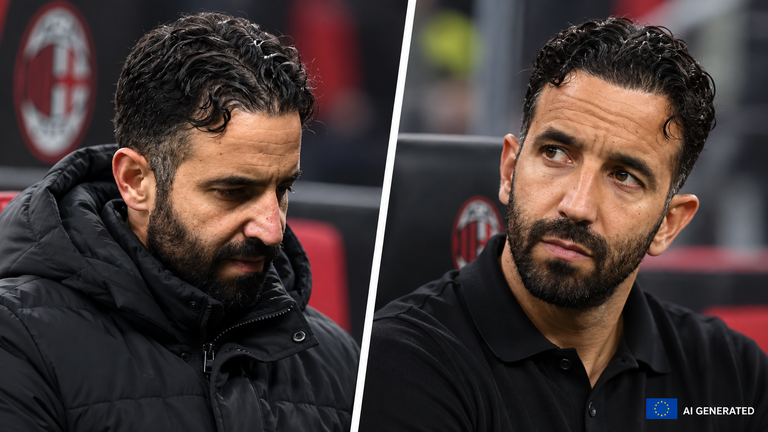
Ruben Amorim's post-match comments after the 3-0 win over Lecce were not throwaway lines. They signalled a genuine change in approach from a coach who built his reputation on never bending, according to La Gazzetta dello Sport.
The context is hard to miss. At Manchester United, Amorim insisted on his system regardless of personnel, and the results were painful. A year ago, after a 3-0 defeat to Manchester City, he was asked whether he might consider changing formation. His answer was blunt: "No one will change my mind. Not even the Pope. This is my responsibility, so I won't change anything tactically." That stubbornness followed him to Old Trafford's exit door. United have picked up just five points in five games since his departure, and Gazzetta notes some of their supporters watched Milan dismantle Lecce with a pang of nostalgia.
What made the Lecce performance notable was not just the scoreline but the words that followed it. "In recent games, we've had some difficulties because our positional structure was too rigid, whereas today the players had a little more freedom, and with a little more freedom, they play better," Amorim said. He went further: "What I've noticed in recent games, and what I'd already experienced at Manchester United, which is why I can't make the same mistake again, is that sometimes we don't have the ideal characteristics to play a certain way. If we don't have them, we have to adapt a little."
From a coach who once invoked the Pope to defend his tactical inflexibility, that amounts to a significant concession. Amorim arrived at Milanello with a well-earned reputation for moulding players to his system rather than the reverse. He tried it at United and it failed. The early signs in Milan suggested a similar path, with the squad looking stiff and results turning uncertain before the Lecce match.
Sunday offered tangible evidence of the shift. There were visible spells with a back four, something Amorim confirmed was deliberate: "We started with a back four to make Chukwueze a little more attacking." The extra positional freedom he granted the squad made Milan look sharper and harder to read, a clear contrast to the rigid positional structure of recent weeks.
Amorim had hinted at this in the days before the match, acknowledging that his squad was not entirely suited to his preferred style. What changed against Lecce was his willingness to act on that acknowledgement rather than push through it. The gap between recognising a problem and adjusting for it is where his United tenure collapsed; closing that gap quickly at Milan is what will define whether this version of Amorim lasts.
Whether this flexibility holds when results are tighter and margins thinner is the next question, and the answer sits entirely with him.