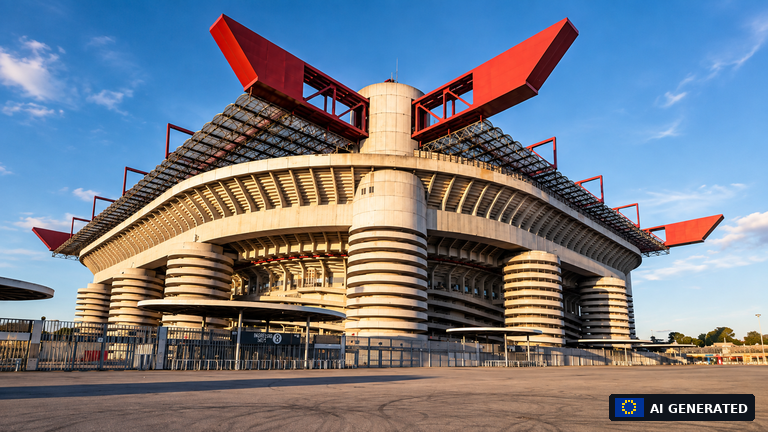
Milan and Inter have submitted their economic feasibility report for the new San Siro to the city council, putting concrete financial figures behind a project that has spent years in the realm of renderings and rhetoric.
According to Calciomercato.com, the new stadium carries a projected cost of €2.149bn and is expected to generate €418m per year in revenue. That figure accounts not only for matchday income but also the offices, hotels and commercial spaces planned around the stadium as part of a wider real estate complex.
The joint venture behind the project, Stadio San Siro SpA, filed the final business plan for the entire development at the city hall at the end of August. Construction is scheduled to begin in 2027 and finish in 2031, with the inauguration targeted for the 2032 European Championship. Whether that timeline holds is another matter entirely. UEFA has reportedly expressed concern about the project being ready in time, and there is currently no guarantee it will be.
The bureaucratic side has accelerated in recent months, but the clubs still face a familiar set of obstacles: legal appeals, regulatory phases and the kind of unpredictable delays that have dogged Italian stadium projects for decades. A preview of the new stadium's facade is scheduled for October, with preparatory work on the construction site set to begin around the same time.
For Milan, the financial logic is straightforward. Serie A clubs generate a fraction of the matchday and commercial revenue their Premier League counterparts pull in, and a modern stadium with integrated commercial infrastructure is the most direct way to close that gap. Whether €418m a year proves realistic will depend on execution, but the submission of the feasibility report at least moves the conversation from ambition to accounting.
The next phase belongs to the regulators and the courts.