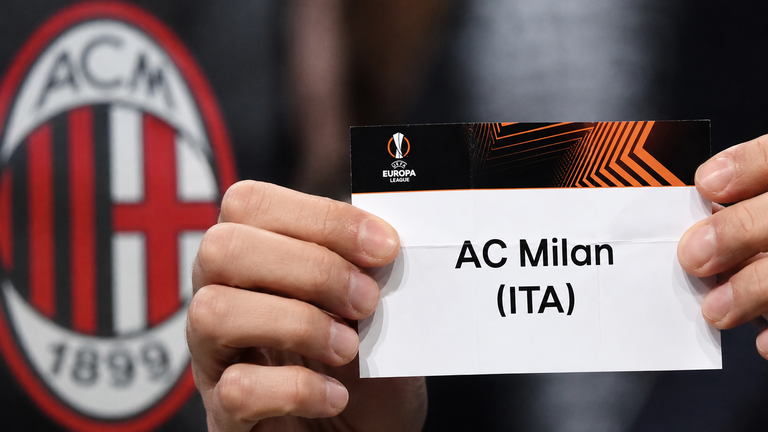
Milan return to European football this season in the Europa League, and their UEFA squad list already carries room for late business, with three spots unfilled and a fourth that could open depending on outgoings.
It is not the competition the club had targeted, but the continental return brings a trophy within reach and gives younger players a stage to test themselves under a different kind of pressure. The expectation in the Europa League is simple: win it.
UEFA registration works differently from Serie A and runs to two lists. List A holds up to 25 players, built from 17 foreign players plus four trained in Italy and four trained at the club. List B covers players aged between 15 and 21 who have spent at least two seasons with the Rossoneri, and it allows unlimited changes.
The definitions matter for who counts where. A club-trained player must have spent three seasons or more at Milan, consecutive or not, which is why Francesco Camarda qualifies. Italian-trained players fall under the same rule on a national scale, which is how Koni De Winter counts through his Juventus youth grounding.
As things stand, Milan have a full squad list. The foreign group takes in the first-team names you would expect, with new signing Diego Moreira added and Fikayo Tomori, Youssouf Fofana and Christopher Nkunku absent. The Italian-trained group runs to four, including Alphadjo Cissè, Pietro Terracciano, De Winter and Samuele Ricci, while Matteo Gabbia occupies the single club-trained slot filled so far.
That leaves the club-trained section short, and Camarda, Francesco Comotto and Davide Bartesaghi can all be promoted from List B to take the count up to 25, each fitting the criteria. Bartesaghi's eligibility from the opening matchday hinges on the exact federal date of his first Milan registration, the same condition that applies to Bouyer in the youth group.
The openings come from the exit door. Rafael Leão and Santiago Giménez both sit in the foreign section and both are expected to leave, which would free two slots, potentially for a centre-back and a No.10. Sankhoun Diawara is also listed among the foreign players and may not be needed, so a new centre-back could take his place and leave the freed space for a striker instead.
Ricci is the other name flagged as a possible departure. If he goes, his exit opens a slot for anyone with three consecutive years of training in Italy. Sales are not mandatory, since players can simply be left off the list, but they would give Amorim cleaner room to register new arrivals.
The list looks close to full on paper, yet the flexibility is real, and the shape of it depends on how many of Leão, Giménez and Ricci are gone before the deadline.