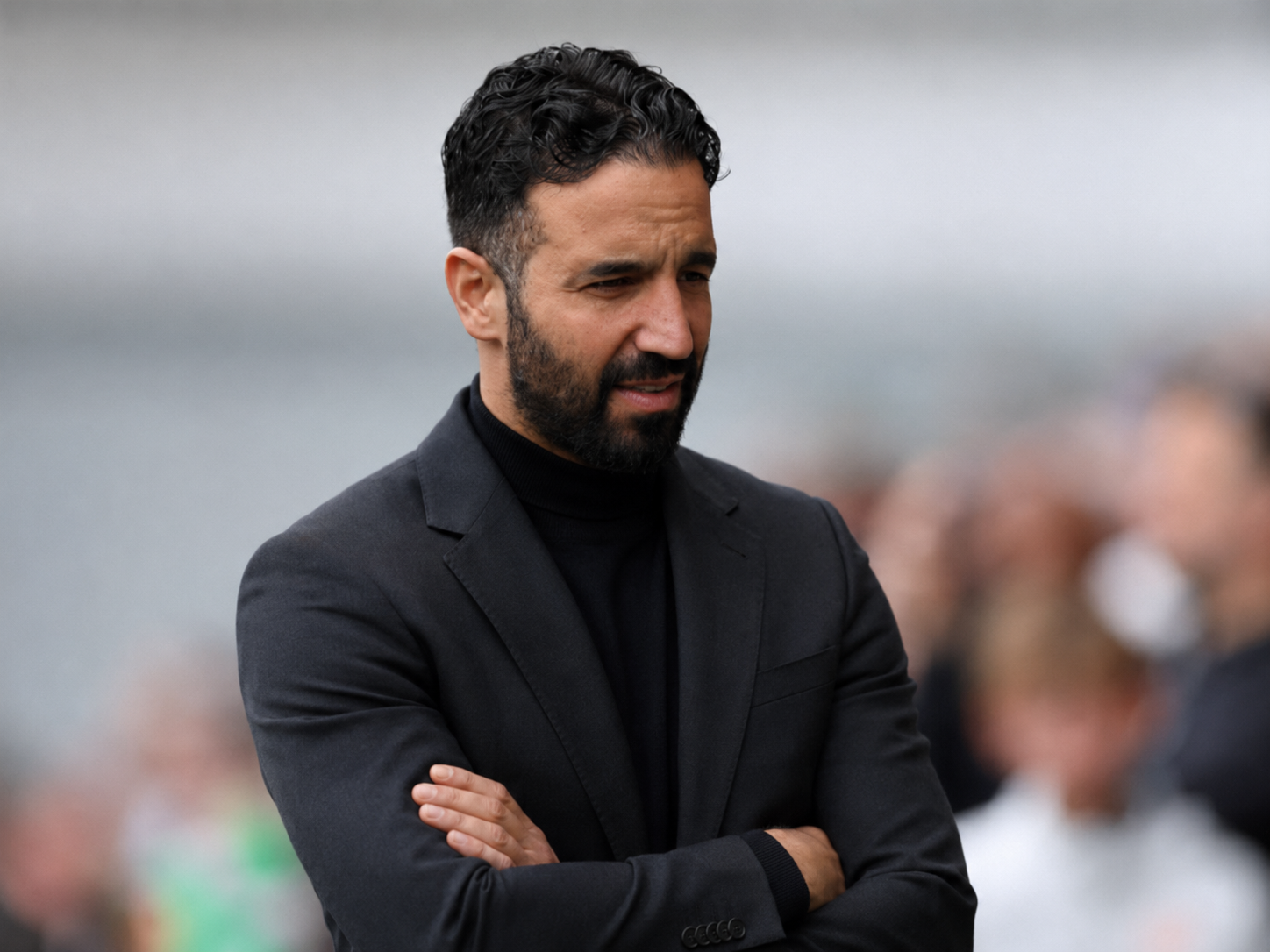
Pervis Estupinan looked set to leave Milan for Aston Villa after a single season, but Ruben Amorim has asked the club to pause the deal, according to reports in Italy.
This is the kind of call that tells you how a new manager sees his squad. Estupinan arrived last summer to solve the left-back problem and never really did, so a return to the Premier League under Unai Emery, the coach who trusted him at Villarreal, felt like a clean exit for everyone. Villa had agreed personal terms and the fee was not seen as an obstacle after their own sales, according to reports over the past week and a half. Then Amorim stepped in. The question is what he sees that makes a second look worthwhile.
The tactical logic is not hard to find. Amorim builds in a 3-2-5 in possession, and the wing-backs are the players who make that shape work, providing width when the team has the ball and dropping into a back five when it doesn't. In his system they are arguably the most important players on the pitch, and he rarely wants two identical profiles. One flank gets the explosive dribbler who wins his duels and carries the ball; the other gets a more measured, playmaking type who circulates possession and combines.
Estupinan fits the second mould, with a twist. He is comfortable inverting into the left half-space rather than hugging the touchline, which frees Christian Pulisic to push wide and stretch the opposition horizontally. Milan don't lose their presence between the lines because Estupinan occupies the space Pulisic vacates. Rohit Rajeev, who laid out the case, points to the De Zerbi blueprint at Brighton, where Estupinan and Kaoru Mitoma rotated constantly, one inverting while the other held width, then swapping again. It made Brighton hard to pin down.
That rotation matters more in Serie A than almost anywhere else. Italian defending is heavily man-oriented, and constant positional swaps drag markers out of position and open the lanes Amorim wants to attack. Paulo Fonseca once admitted he feared facing Cagliari more than Real Madrid partly because of the man-to-man approach. A wing-back who can invert and scramble those assignments is a genuine weapon here.
The catch is Estupinan himself. His individual season was uneven, and he had a habit of following a high with a costly low. He scored the winner in the derby against Inter, then a week later let Gustav Isaksen run in behind for Lazio's winner. The data backs the split personality: measured against Milan's other options like Alexis Saelemaekers and Davide Bartesaghi, and against the wing-backs Amorim used at Sporting and United such as Geny Catamo, Geovany Quenda and Amad Diallo, Estupinan's defensive numbers from his last Brighton campaign stand out clearly, but his attacking creativity lags the group.
So Amorim is buying time to answer a specific question: can Estupinan be the reliable, ball-circulating half of the wing-back pairing while a more direct dribbler owns the other flank? If the answer is no, or if a better profile lands, the Villa move can still go through.
For now the decision sits with Amorim, and until he has watched Estupinan up close in his own structure, the Aston Villa deal stays on ice rather than dead.